
Junagarh, then bhujia.
Enough time for the fort's painted palaces and a stop at a namkeen shop before your train. Add the Prachina Museum if your schedule allows.
The four-hour plan →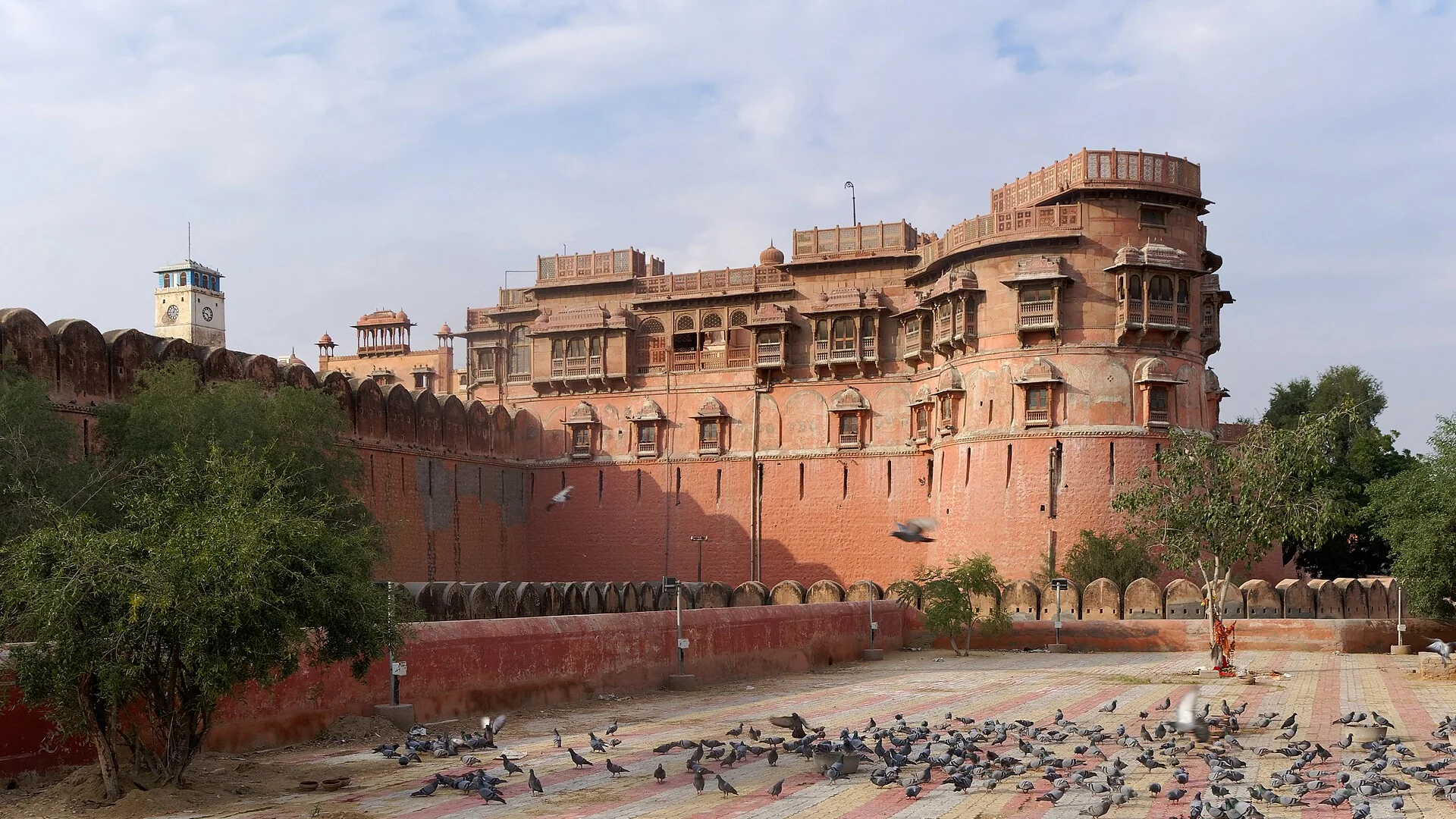
The Hotel Vedantra guide · Bikaner, Rajasthan
A working desert city of red sandstone, painted palaces, camel-milk kulfi and some of the best namkeen in India. Here is how to see it properly — and why two days is better than one.
01 The short version
Bikaner is Rajasthan at its most lived-in: a working desert city with a 16th-century fort that was never taken, a walled city of red-sandstone havelis, and a food culture so good that the city's name is on packets in every Indian grocery store.
The city sits on the edge of the Thar, roughly halfway between Jaipur and the Pakistan border. It was founded in 1488 by Rao Bika, a son of Rao Jodha of Jodhpur, and grew rich on the caravan trade between Central Asia and the Gujarat coast. That money built the temples, havelis and palaces you see today. What it did not build is a tourist bubble. Bikaner remains a real working city: warm, busy, unhurried in the old lanes, and all the better for it.
This guide is written by the team at Hotel Vedantra, on Station Road. We would love to host you, but we have written it to be useful whether you stay with us or not.
Bikaner district · Rajasthan · India · 28.02°N, 73.31°E
Enough time for the fort's painted palaces and a stop at a namkeen shop before your train. Add the Prachina Museum if your schedule allows.
The four-hour plan →A full loop: old city at breakfast, Junagarh at noon, the camel farm in the late afternoon, Lalgarh at sunset.
The one-day plan →Karni Mata at dawn, Devi Kund, then Raisar for a dune sunset with Kalbeliya dance, fire and dinner. This is the version to book.
The two-day plan →02 A few things worth knowing
Bikaner is easy to love once you know how it works. These are the things that make a visit better — and the reasons we think the city deserves more than a night.
The fort, the old city and the food are close together; the desert is a short drive out. Two nights lets you see all three without rushing. One night is enough for the fort; two is enough to understand the city.
Kote Gate, Bhujia Bazaar, the Rampuria lanes and Bhandasar are best on foot, early in the morning or after four. This is a living market, not a heritage park — and that is exactly why it is worth walking.
The temple at Deshnoke is one of India's most extraordinary living shrines. The sacred rats are cared for by the community and considered auspicious, and visitors of every faith are welcome. Go once. Wear socks, leave leather behind, and give yourself an hour.
Raisar's dunes, about 20 km east, make a proper evening: a camel or jeep ride, chai, Kalbeliya dance, fire and dinner under the stars. We can arrange the car and a reputable camp; go for sunset and stay for the music.
India's national camel research centre is 8 km out: mothers and calves, three breeds, a small museum and camel-milk kulfi. It is open daily, 11:00–18:30; late afternoon is best.
Start with dal kachori and pakodi, cool down with an old-city sharbat, finish with rabdi or kesar kulfi. The city is vegetarian, mostly Jain-friendly, and generous with seconds.
Come for the fort. Stay for the food. Leave time for the desert.
03 The essentials
If you only do five things in Bikaner, do these. They are ordered by how much they reward a little patience, not by how easy they are to reach.
01 · The one to start with
A fort built on flat ground, which is the first clue that Bikaner did things its own way.
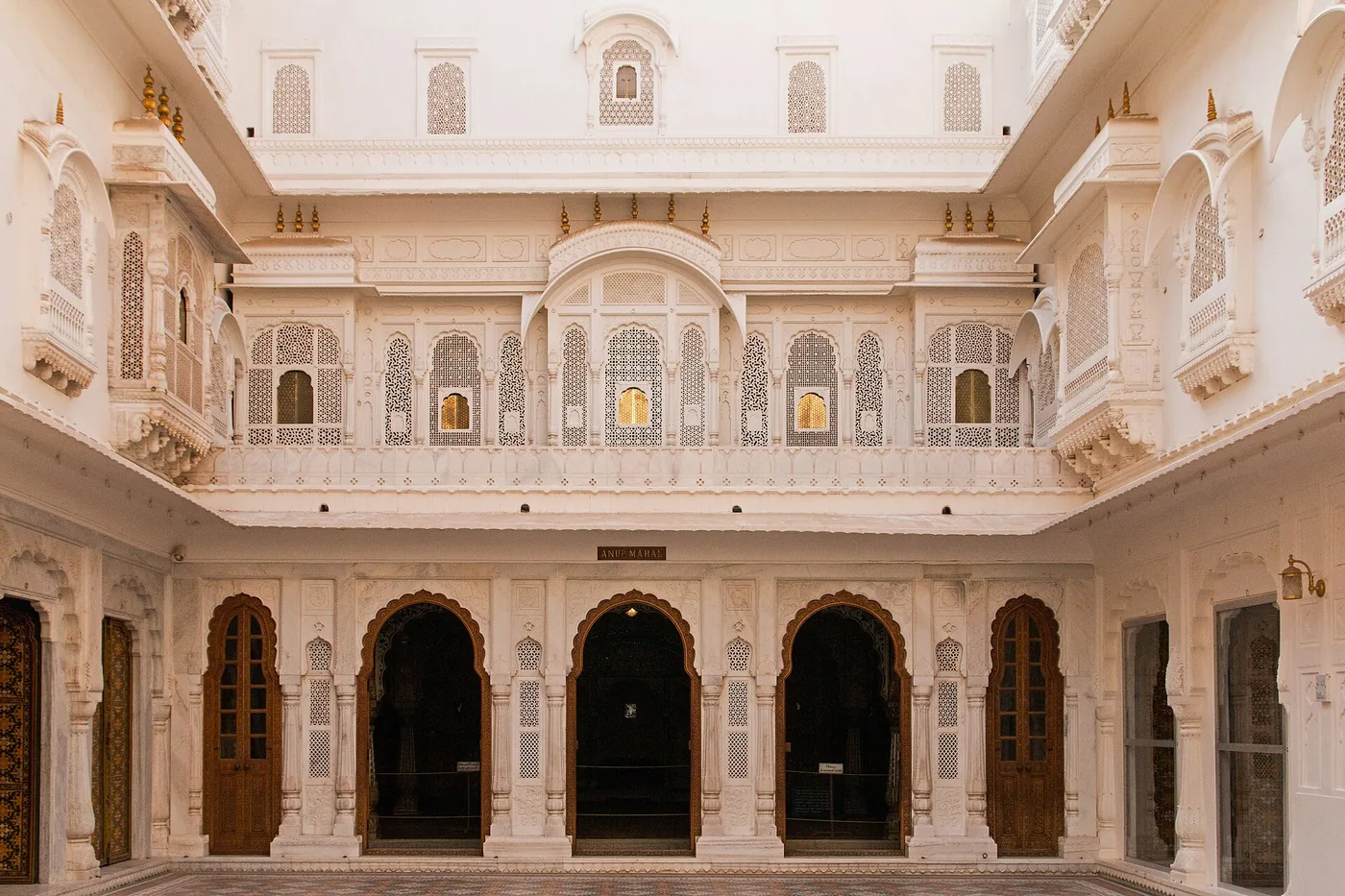
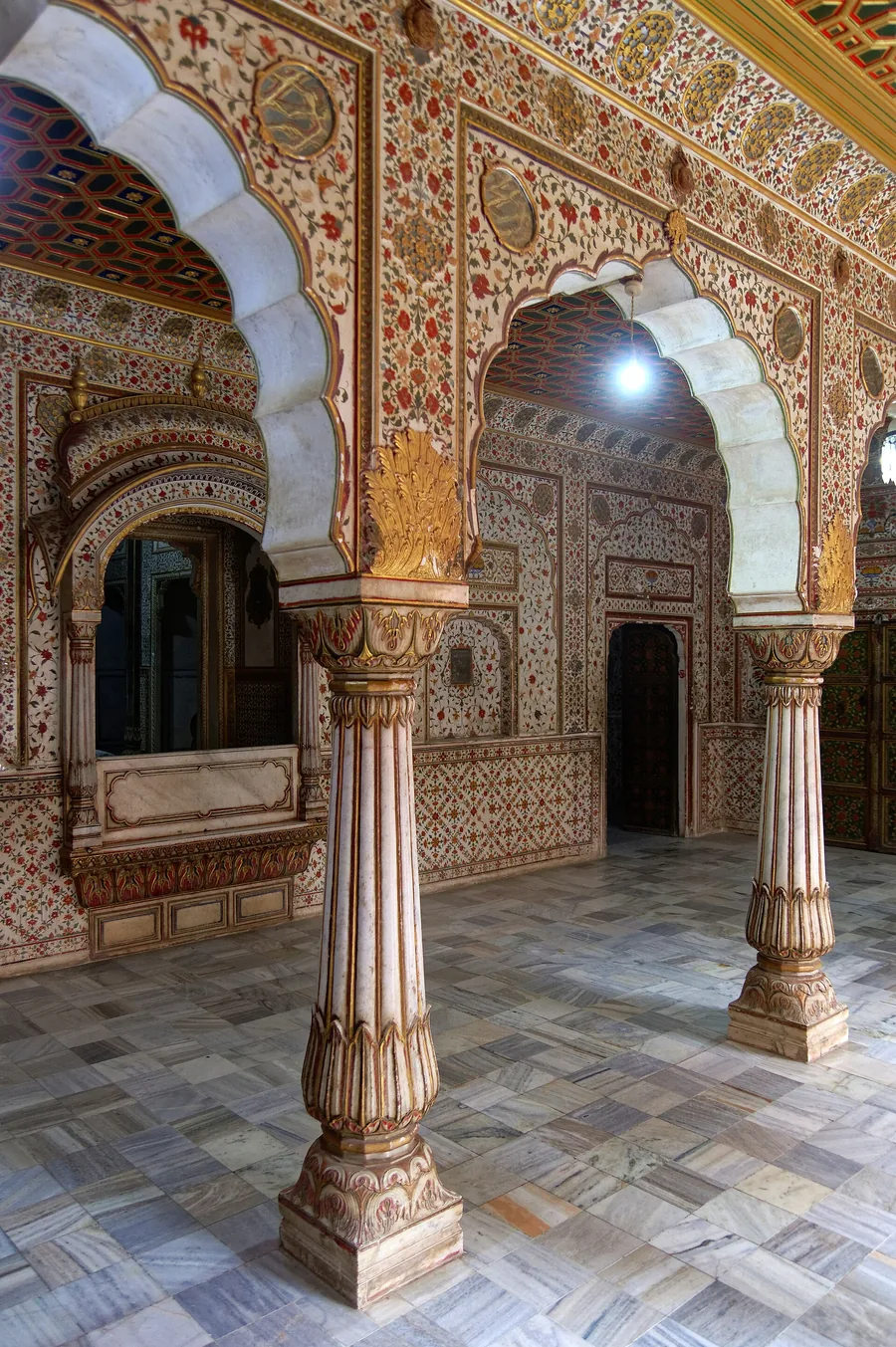
Most Rajasthan forts climb a hill and dare you to invade. Junagarh sits on the plain, protected by a moat, thick walls and a century of careful diplomacy. Rao Jodha's descendants built it between 1589 and 1594, and it was never taken. Inside, the courtyards get quieter and stranger as you go: Anup Mahal's mirrorwork, the blue-and-gold fantasies of Chandra Mahal, the armoury, the palanquins, the silver howdah. The Prachina Museum, added later, is a good extra if you like textiles and royal portraits.
Good to knowThe signage is thin and the route is not always obvious. A guide at the gate adds real context; agree the fee first. Camera tickets cost extra, and the painted rooms are darker than the photos suggest — which is part of their atmosphere.
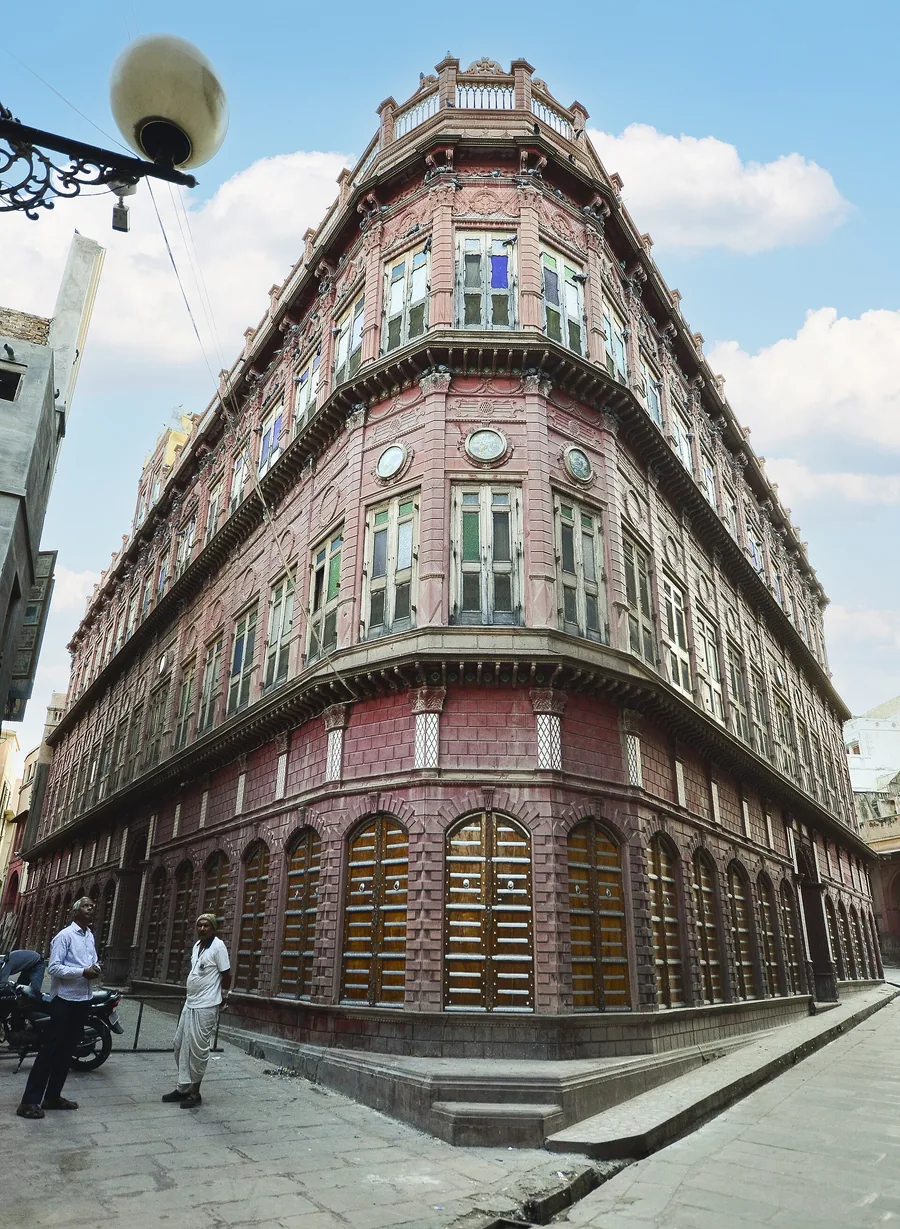
Seven houses built by three wealthy Rampuria brothers, their façades carved from Dulmera red sandstone in a style that seems to fold and curve rather than stand still. The cluster is the old city's signature image, and the lanes around it are best explored slowly, on foot, before the heat and the scooters arrive.
Good to knowThese are family homes, not a museum. Admire them from the lane and ask before stepping into a courtyard. A local guide can help; agree the price before you set off.
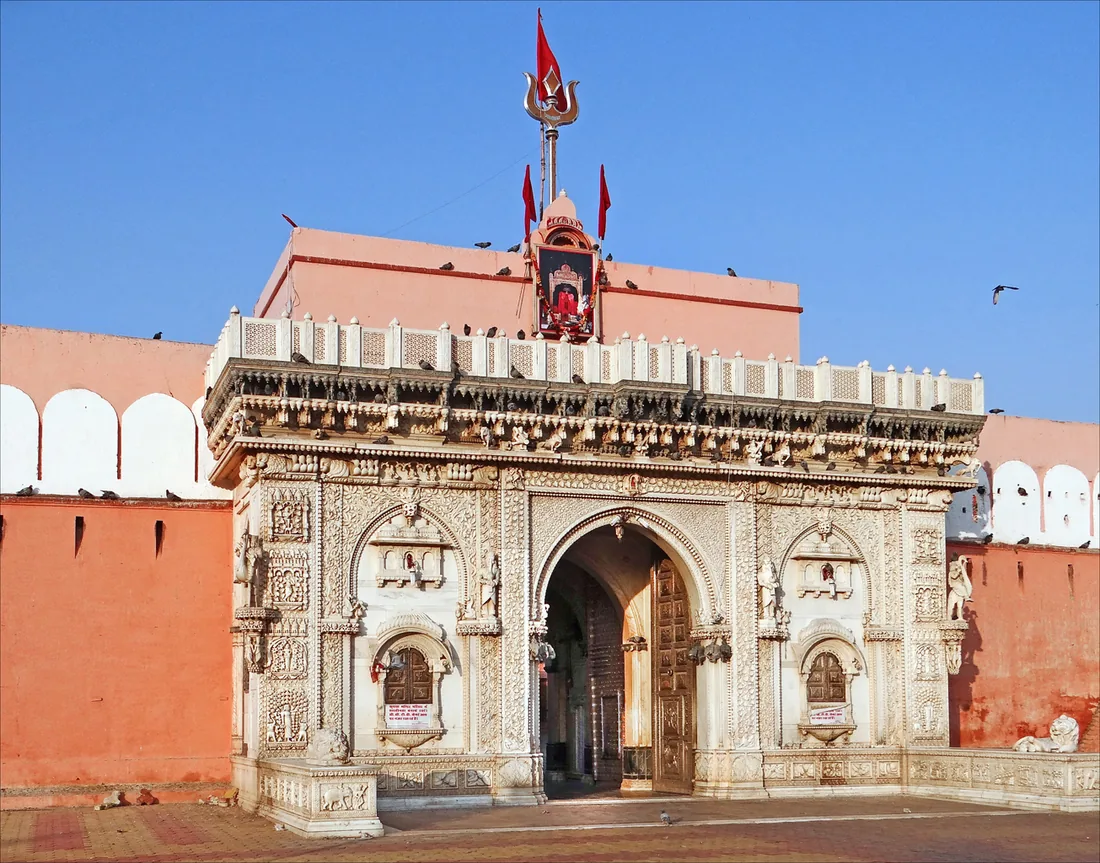
A 16th-century temple to a mystic revered as an incarnation of Durga, and one of Rajasthan's most extraordinary living shrines. Thousands of kaba — sacred rats — live here, fed and protected by the community and considered auspicious. The silver doors, marble façade and sheer strangeness of the place make it unforgettable. Visitors of every faith are welcome; everyone should see it once.
Good to knowShoes off, socks on, no leather. Walk around the rats rather than over them, keep your voice low, and let the temple set the pace. Mornings are calmest.
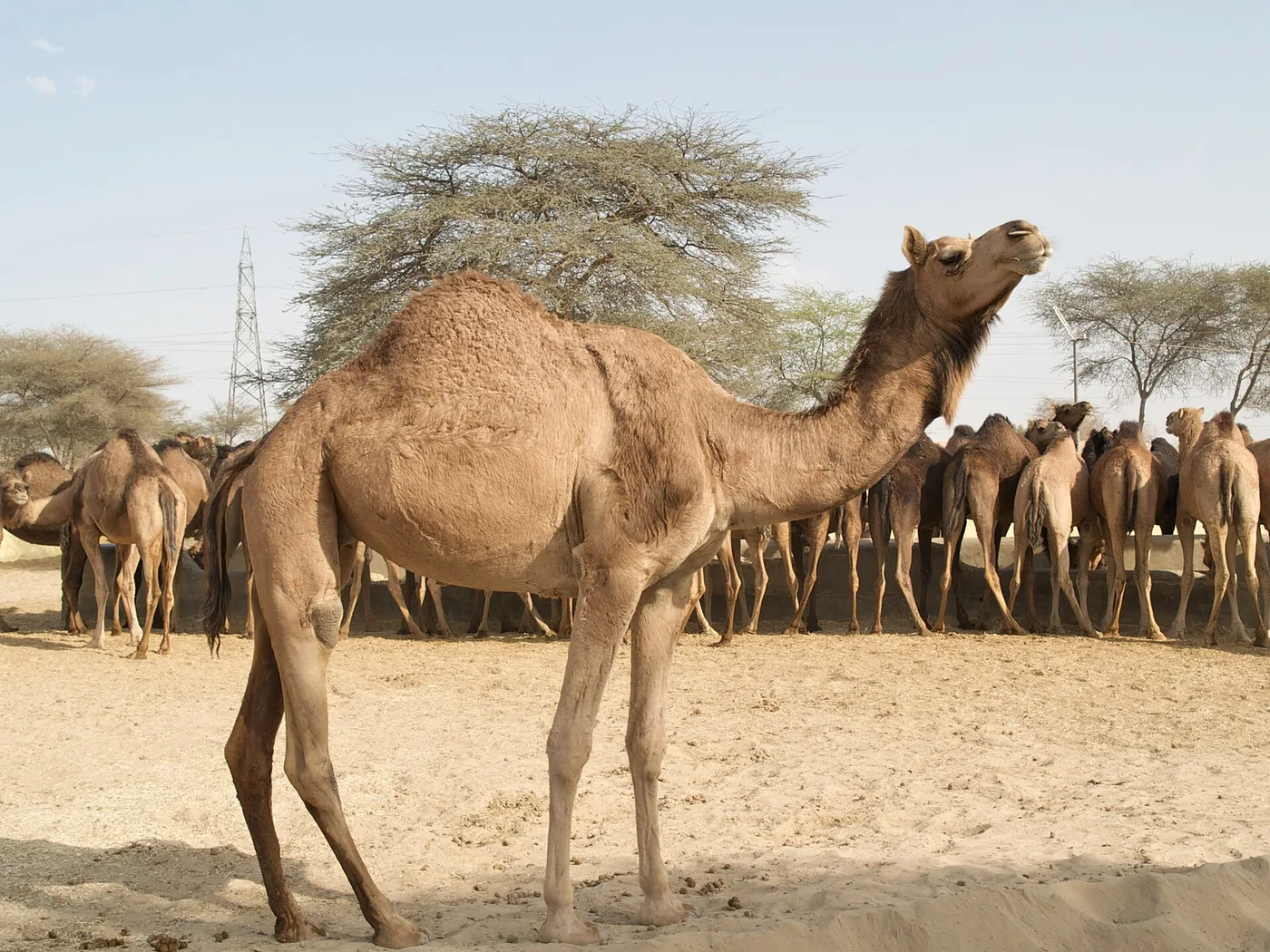
India's only ICAR institute for camel research, and a genuinely joyful afternoon. You will meet Bikaneri, Jaisalmeri and Kachchhi breeds, see calves in the nursery, and learn how the desert's most useful animal is being studied and conserved. The milk parlour sells kulfi, lassi and ice cream made from camel milk — the kulfi is the reward at the end.
Good to knowGo around 15:30–17:30 when the herd is moving and the light softens. The camel ride is a gentle loop, and the calves are the highlight for most visitors.
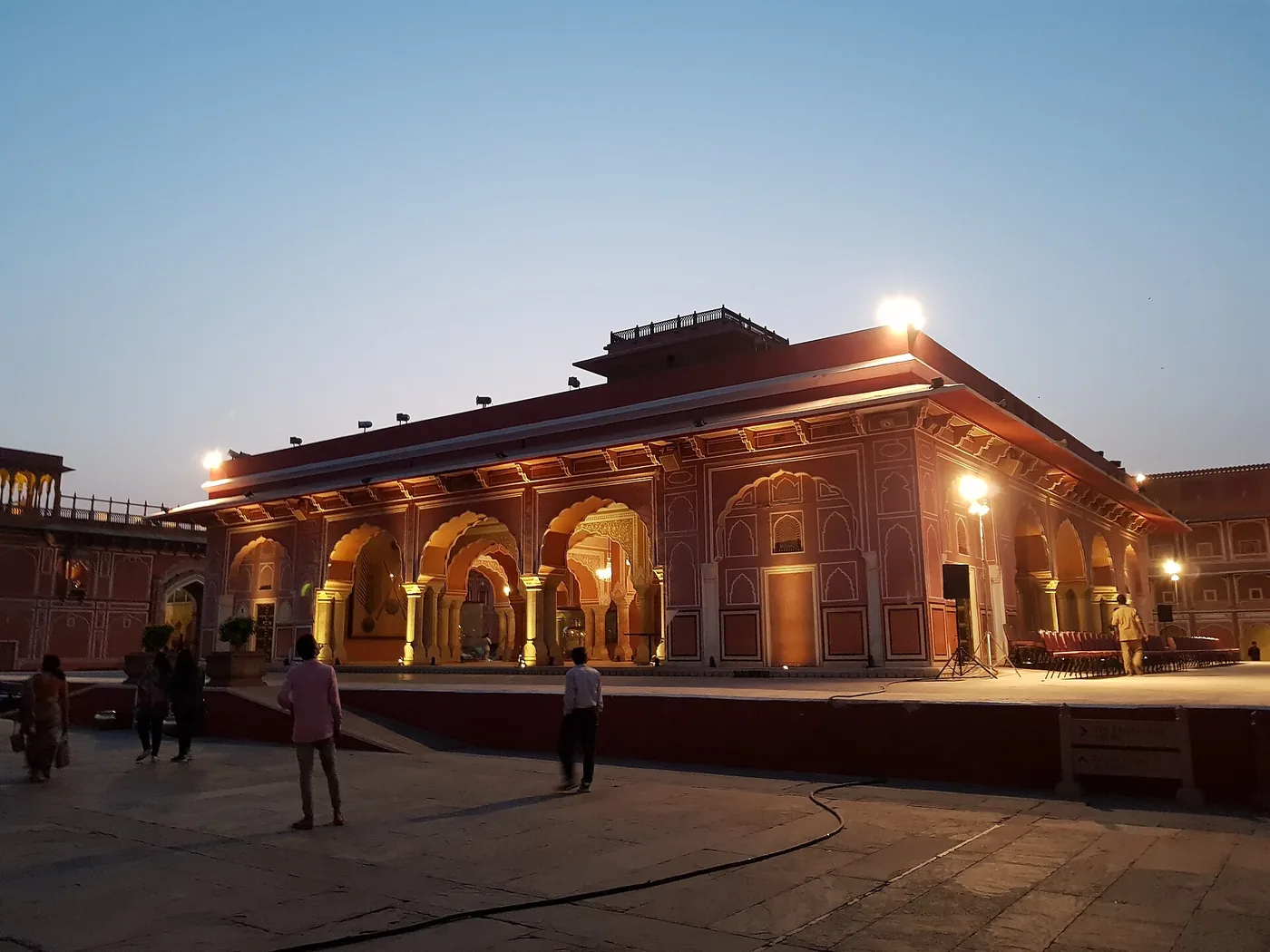
Built for Maharaja Ganga Singh between 1902 and 1926, Lalgarh is a confident hybrid of Rajput, Mughal and European ideas — red sandstone outside, carved interiors, and a scale that still feels royal. The Sadul Museum holds the family's trophies, photographs and a surprisingly intimate collection of royal memorabilia. Come late afternoon, when the sandstone turns the colour of the desert.
Good to knowThe museum is small and personal; allow 45 minutes and go on a weekday if you can. The palace exterior is at its best in the last hour of daylight.
Three more places that reward a car and a little extra time — including the desert evening we would build a trip around.
 Old city · 2.5 km
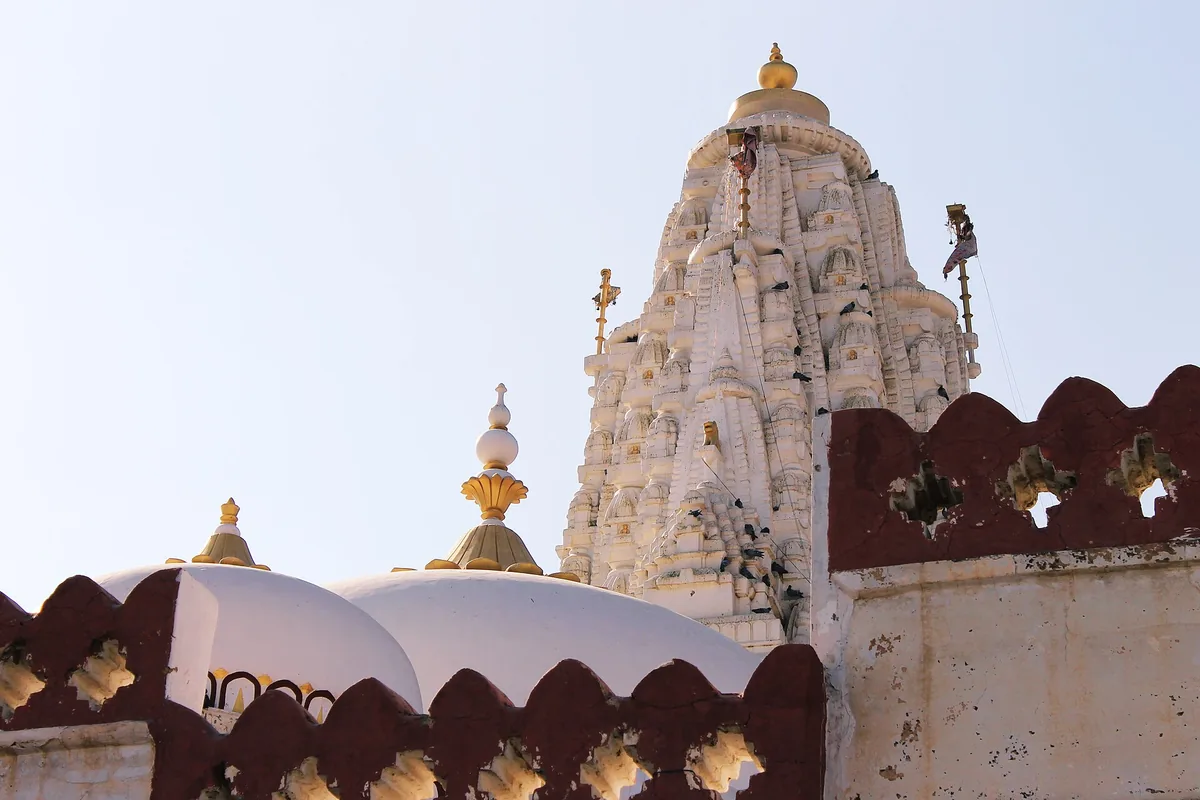
A Śvetāmbara Jain temple with mirrorwork ceilings and a foundation legend involving 40,000 kg of ghee. Its dating is disputed — sources place it anywhere from the 12th to the 16th century — but the interior is the reward.
Google Maps →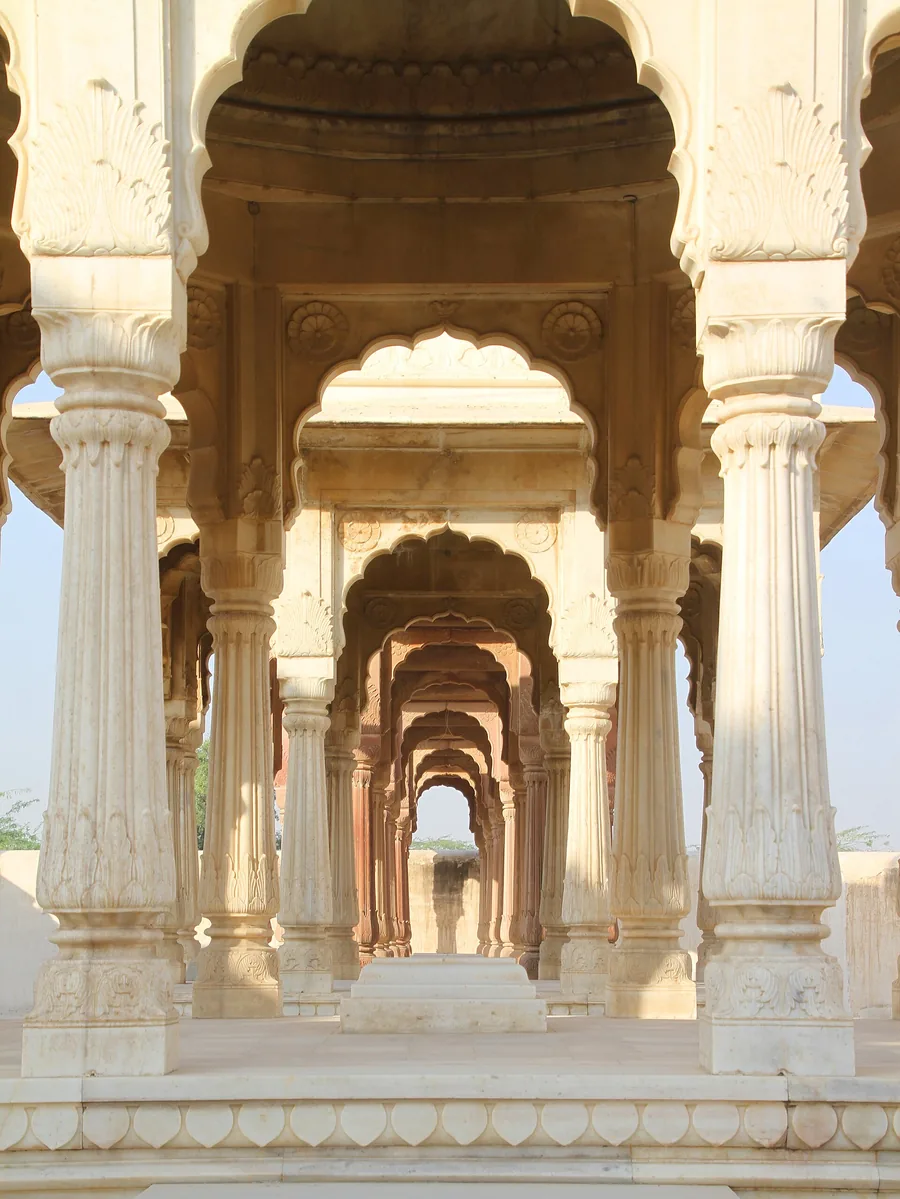 8 km east
The cenotaphs of Bikaner's royal family, set around a tank. Quiet, weathered and best in late-afternoon light. Allow half an hour.
Google Maps →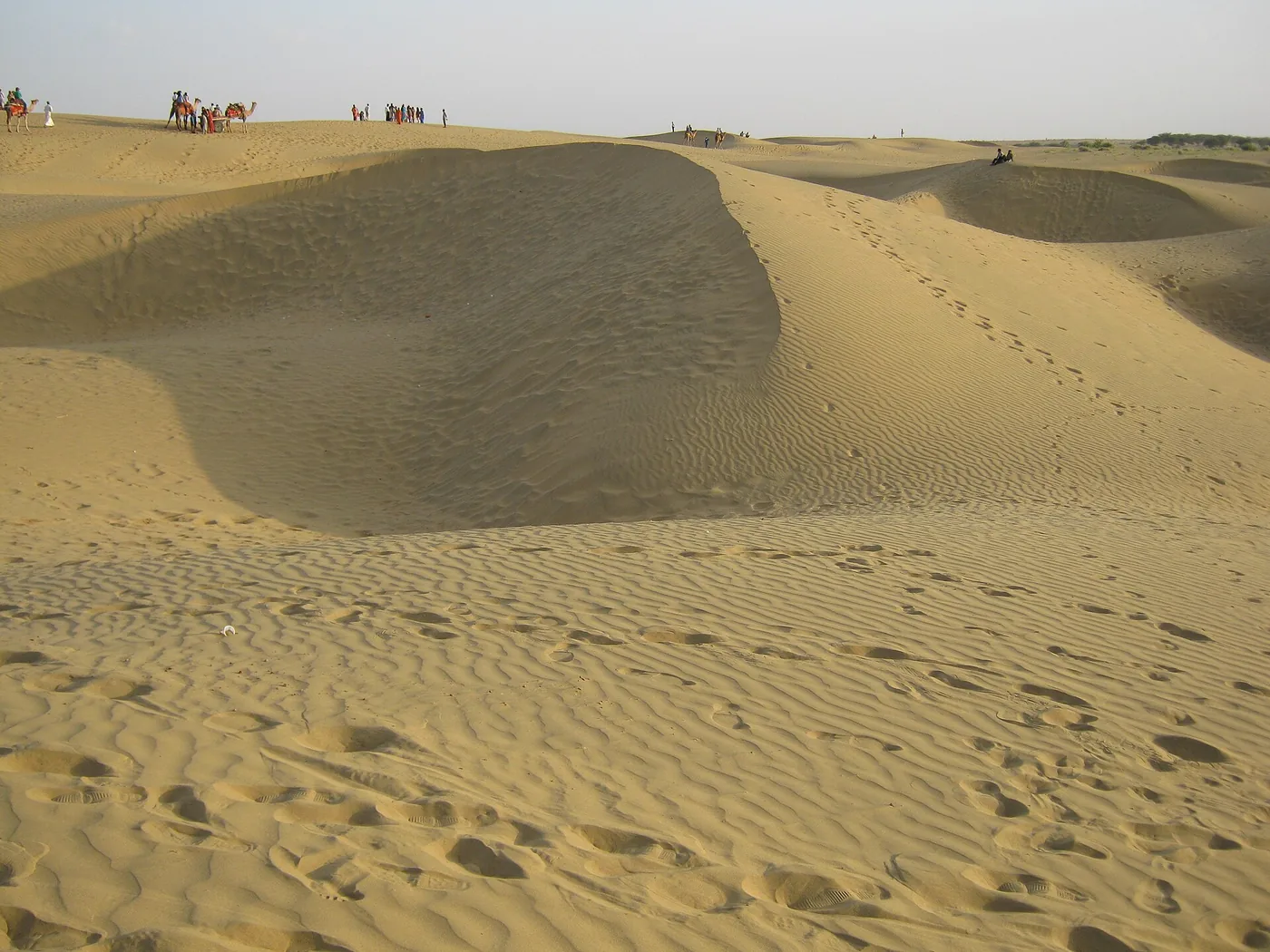 20 km east · desert evening
Twenty kilometres east, the Thar opens into soft dunes. Come for sunset: a camel or jeep ride, chai, Kalbeliya dance, fire and dinner under the stars. We can arrange a car and a reputable camp — this is the evening guests remember longest.
Google Maps →04 The map
Bikaner's sights are spread out: the fort and old city in the centre, the camel farm to the east, Karni Mata 30 km away, and the Raisar dunes are about 20 km east. Filter the map, tap a place, and the list on the right will follow.
Loading the map…
04.1 The desert evening
The Thar is not a backdrop here. It is the best evening out in Bikaner.
Drive 20 km east and the city gives way to open sand. Settle on a dune for sunset, take a camel or jeep ride, then sit down for chai, Kalbeliya dance, a fire and dinner under the stars. It is relaxed, warm and genuinely fun — the kind of evening people talk about on the train home.
We arrange the car and a reputable camp; tell us your dates and we will confirm what is included and the current price. Bring a layer in winter and cash for extras.
05 The old city
The best way to understand Bikaner is to walk the walled city before it fully wakes up. This route starts at the main gate, follows the trade streets, and ends with kachori and chai.
Go before 11:00, or after 16:00 when the light softens and the market picks up again. The route is roughly 3.2 km with stops, and the lanes are flat but uneven. Wear shoes you can walk in, carry water, and keep your camera out.
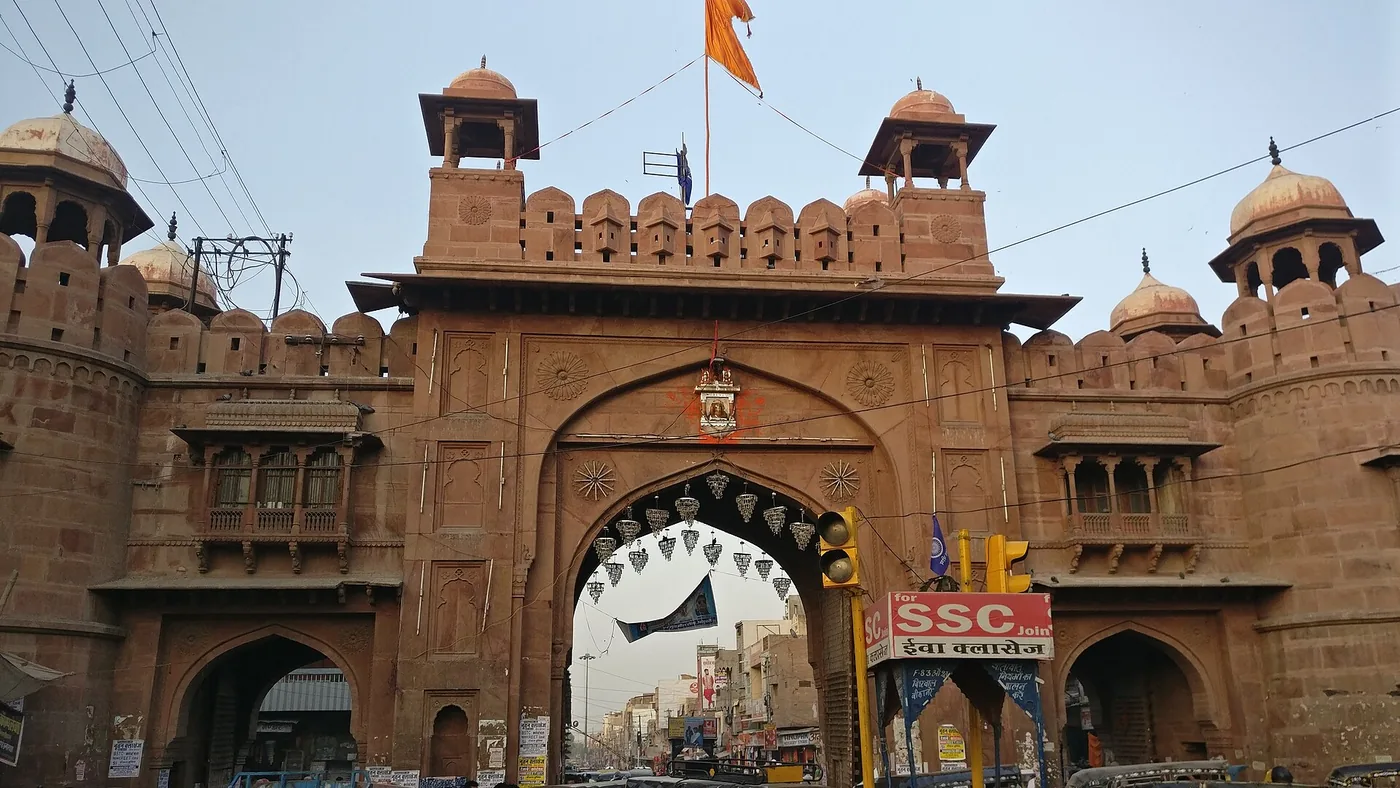
The old city's main entrance and still the busiest way in. The gate marks the seam between the walled town and modern Bikaner; look up at the arch before you walk through it, because most people don't.
The name is the promise. This is where the city's most famous snack is sold in giant trays and sealed packets. Buy a small bag from a busy shop and eat it while it's crisp.
Bikaner's wholesale grain and spice market. It is not a sight in the guidebook sense — it is better than that: weighing scales, sacks of chillies and the smell of cumin in the morning air.
Turn into the lanes around Joshiwara and look for the curved red façades. The cluster is best appreciated by walking a slow loop rather than photographing one house from the front.
Three storeys, mirrorwork ceilings and a foundation story involving 40,000 kg of ghee. Remove your shoes, cover up, and take your time inside. Photography may be restricted; ask first.
A short walk away, and one of the old city's most ornate temples. The interior carving is the draw; the lanes around it are a good place to slow down.
Finish with chai and dal kachori at Juniya Maharaj, or walk five minutes to Chunnilal Sharbat for a jasmine sharbat. Sit down, watch the traffic, and let the morning catch up with you.
06 The food trail
The city gave its name to a snack sold across India. But the reason to eat here is the everyday rhythm: dal kachori in the morning, a cold sharbat at noon, rabdi in the afternoon, kulfi at the end of the day.
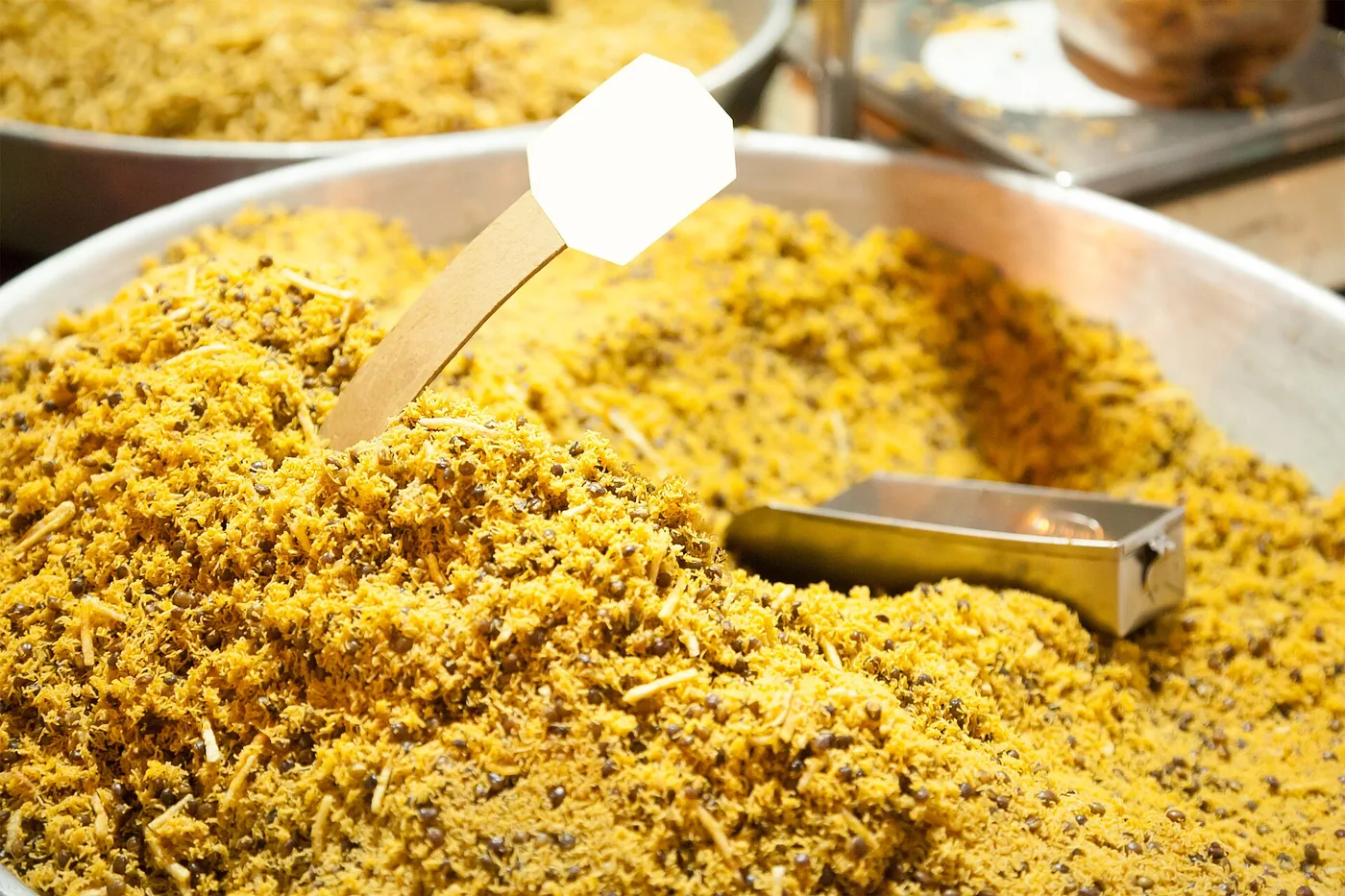
Bikaneri bhujia is made from moth beans, gram flour and spices, and it has a GI tag to prove where it comes from. You will find it in packets at the station and in giant trays in the old city.
The city is overwhelmingly vegetarian, and many kitchens are Jain — no onion, garlic or root vegetables. Ask before assuming a dish is Jain-friendly. Most sweet shops are happy to explain what is in a tray; pointing is perfectly acceptable.
The best approach is to pick one kachori shop, one sharbat counter and one sweet shop each day, then return to the ones you love. Bikaner rewards repeat visits.
A note on names: branches and ownership change. The six shops below were checked in October 2026; use the Google Maps links for current hours before you set out.
Fine, crisp strands of moth-bean and gram-flour dough, spiced and fried. Eat it by the handful, or use it to finish a plate of dal.
Look for Bikaner Bhujia Bhandar, Satta Bazaar
A hollow puri filled with potato, sprouts, yogurt, tamarind and mint chutneys, then covered in sev. Sweet, sour, cold and crunchy in one bite.
Look for Old-city chaat counters
Flaky, deep-fried and stuffed with spiced dal. The classic breakfast is one hot kachori with a bowl of aloo sabzi and a cup of chai.
Look for Juniya Maharaj, Chai Patti
The sweet cousin: a kachori filled with khoya, fried and soaked in syrup. Rich enough that half is usually enough, especially before a fort visit.
Look for Old-city sweet shops
Bikaner's version is denser and less syrupy than Bengal's. Look for the small, warm ones in a shop with a queue; they are worth the wait.
Look for Chhotu Motu Joshi, old-city sweet shops
The camel milk is subtly salty and richer than cow's milk; the kesar version is the safer first order. Finish the day with one, not both.
Look for Sankhla Kesar Kulfi, the camel centre's milk parlour
06.1 The local table
These are the places we send guests to. We have no commercial relationship with any of them — they are simply the shops that do one thing exceptionally well. Hours change, so check the map link before you go.
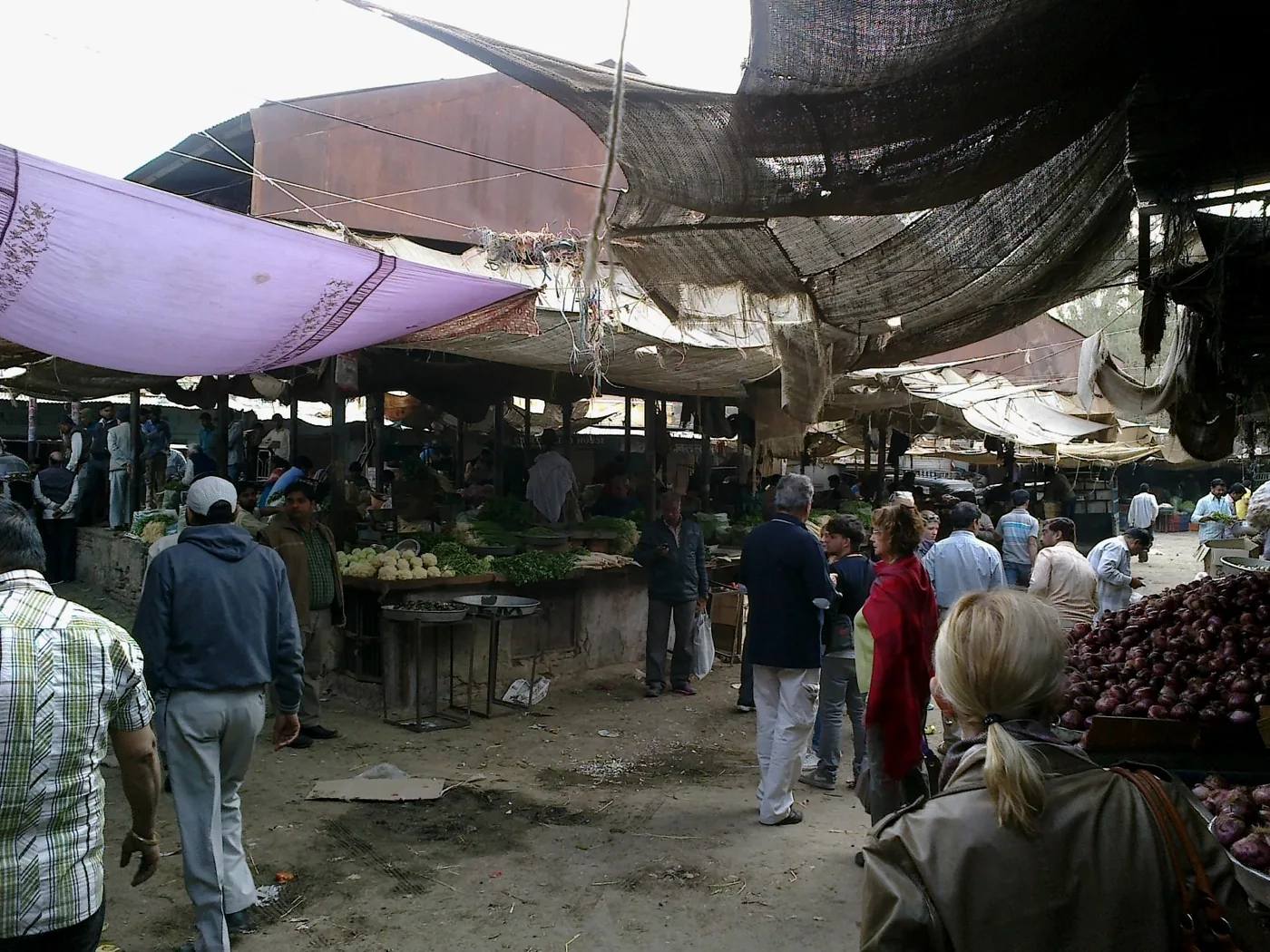
Two things only, both done properly: a flaky dal kachori and a soft dal pakodi. Join the morning queue on Bada Bazaar Road and eat them standing up.
A small old-city counter with a big reputation for floral sharbats — jasmine, white rose, khus and seasonal fruit. Ask for a small glass and drink it slowly.
A tiny shop with a short menu and a long queue: rabdi, ghewar and malai laddoo. The rabdi is thick enough to stand a spoon in.
The old-city institution near Kote Gate for rasgulla, poori bhaji and salted lassi. Come for breakfast or a late, unfussy plate.
The classic end to a Bikaner evening: dense kesar kulfi, plus sugar-free options if you want them. Sit outside and watch the gate traffic.
Fresh bhujia and namkeen near Satta Bazaar, plus a proper Bikaneri breakfast if you arrive hungry. Buy a small packet for the train.
06.2 A day of eating
This is a template, not a challenge. Eat when you are hungry, drink more water than you think you need, and always leave room for kulfi.
Juniya Maharaj for a hot kachori, dal pakodi and chai. Arrive before the queue peaks.
Chunnilal for jasmine or white rose. A small glass is enough before lunch.
Dal, baati, churma, seasonal vegetables and rice. Vegetarian, usually unlimited.
Manka Maharaj for rabdi, ghewar and malai laddoo. Share one plate; it is rich.
Sankhla for kesar kulfi. Sit outside if the evening is cool.
If it's the season, look for ghewar, a disc-shaped Rajasthani sweet topped with mawa and nuts. It is rich, messy and worth trying once. Also ask for dal baati churma — Bikaner does the plain, homely version very well.
06.3 Stay in the centre
Hotel Vedantra sits on Station Road, opposite Platform 6 — 100 metres from Bikaner Junction, 2 km from Junagarh, and a short auto ride from the old city, the camel farm and the road east to the dunes. It is the practical base for a city whose best sights are spread across 30 km.
61 rooms and suites, an all-day restaurant, and parking for up to 70 cars across two floors. Tell us what you want to see and we will help you fit it into the time you have.
07 Crafts & shopping
Bikaner's crafts are specific: Usta art (gold work on camel hide), hand-knotted carpets, and the city's famous namkeen. The best shopping is not a single emporium but the lanes around Kote Gate and Bhujia Bazaar.
Shop sensibly. A fixed-price government emporium is the low-hassle option; the lanes are better for bargains and conversation. Ask before taking photographs of shopkeepers or their work.
Shop the old city on Google Maps →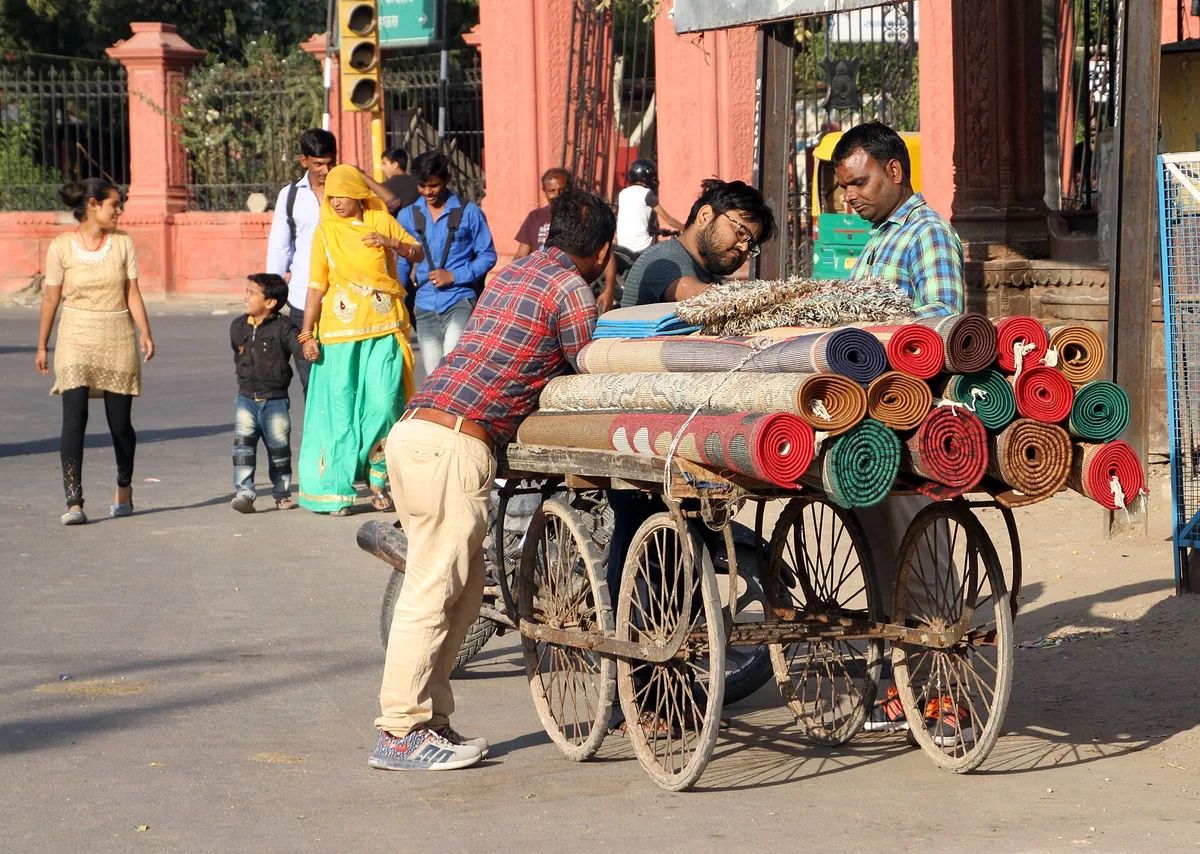
08 The calendar
Bikaner's festivals are mostly local, religious and unapologetically loud. The one to plan a trip around is the Camel Festival in January; the rest are reasons to linger if your dates overlap.
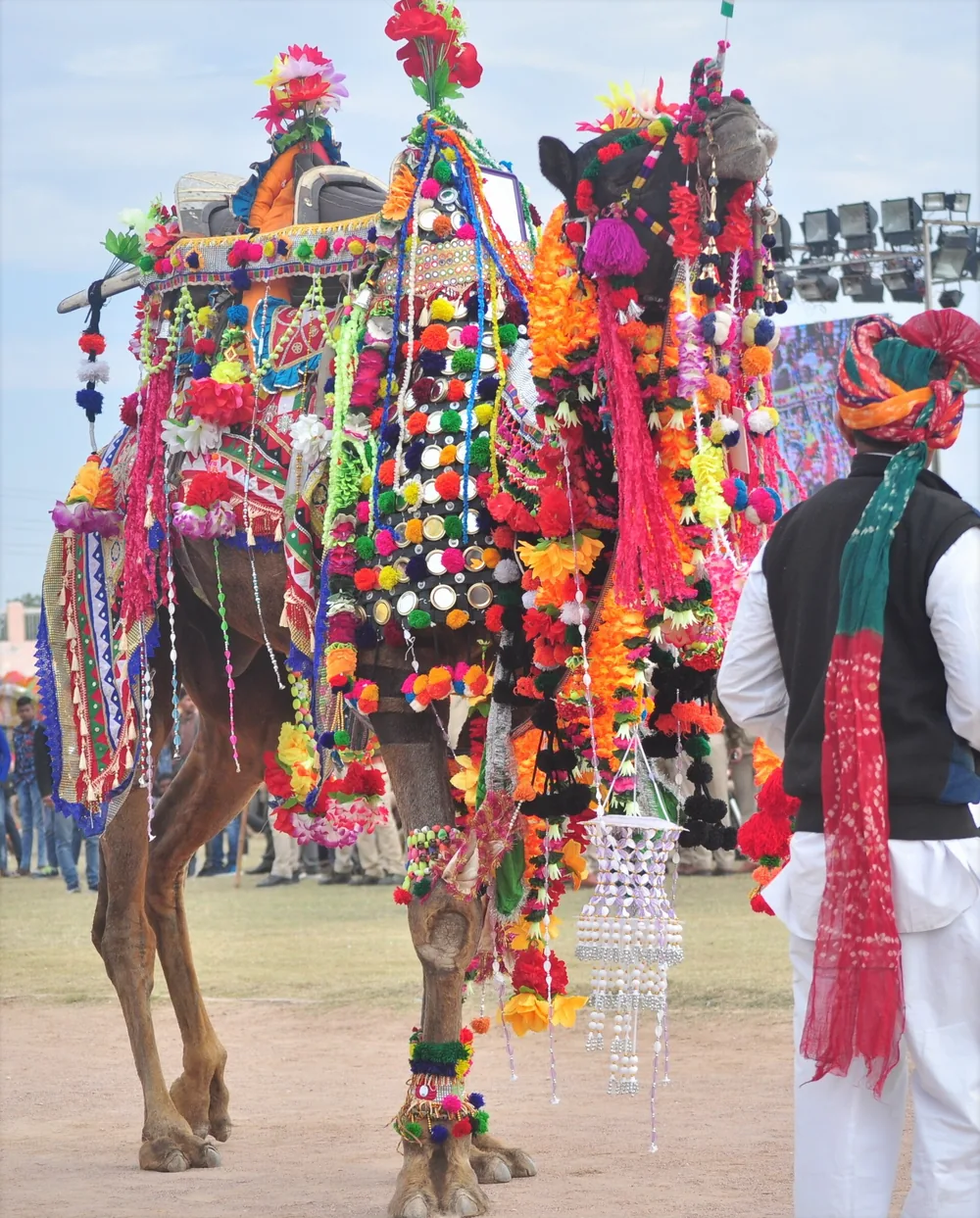
For three days each January, Bikaner's camels get dressed up: trimmed, painted, decorated with mirrors and tassels, then paraded and raced on the sand. There are folk performances, turban-tying contests, craft stalls and a great deal of kulfi. It is the city's biggest party, so book trains and rooms early.
Announced dates: 8–10 January 2027. Some tourism listings still show 9–10 January; confirm with Rajasthan Tourism before booking travel.
Colour, music and processions. The old city is exuberant; the main roads are best avoided if you don't want to be painted.
A women's festival honouring Gauri. Look for decorated images, evening processions and a quieter, more domestic mood.
Monsoon swings, songs and greenery. The city is hot and humid, but the celebrations are intimate and local.
Nine nights of devotion at Deshnoke. The temple is busy, especially in the final days; go early or late.
A desert fair at the Kolayat lake, about 50 km south-west, on Kartik Poornima. Livestock, sadhus and a big religious gathering.
09 The plans
Choose the version that fits your train, your energy and the season. All three assume you are starting from Station Road; adjust the first and last stops if you are coming from elsewhere.
Between trains, or a half-day before check-in
This works if you arrive before 10:00 and leave after 15:00. If your train is earlier, do the fort first and take bhujia to go. Keep your bags at your hotel or in the station cloakroom.
Timing tip: Junagarh's last entry is 16:30, but the light and crowds are better before noon. The fort is exposed; carry water.
Two hours inside is tight but enough for the main courtyards, Anup Mahal and the armoury. Take the guided route if you want context.
Optional. The silver, textiles and royal portraits are a good 30-minute add-on if you're not rushed.
A 15–20 minute walk through the old city, or five minutes by auto. Keep an eye on the traffic and your bag.
Buy a quarter-kilo of fresh bhujia at Bikaner Bhujia Bhandar, then walk to Chhotu Motu Joshi for a rasgulla or poori bhaji. This is the part people remember.
Allow 15 minutes; autos are easy to find near Kote Gate.
A full day in the city
A full day that covers the fort, the old city and the camels, with sunset at Lalgarh. It is ambitious but doable by car; add 30 minutes if you're using autos.
If it's Sunday: the Sadul Museum is closed; the camel farm stays open. Swap Lalgarh for a longer old-city evening and a kulfi at Sankhla.
Kote Gate to Rampuria and Bhandasar, before the market heat. Stop for kachori and chai on the way.
The main event. Two and a half hours, including the Prachina Museum if you have the energy.
A vegetarian thali at a busy local restaurant; ask your driver for somewhere current, or head to Chhotu Motu Joshi for poori bhaji and lassi.
Camels, calves and camel-milk kulfi. It stays open until 18:30, and the herd is most active late afternoon.
The Sadul Museum is small but rewarding; the exterior is best at sunset. The museum is closed Sundays.
Walk the palace approach for photographs, then back to Station Road for dinner.
The version worth booking
Day one stays in the city. Day two goes east to Deshnoke and the cenotaphs, then out to the Raisar dunes for sunset, Kalbeliya dance, fire and dinner. You will cover about 110 km across the two days — roughly 90 km of it on day two — and end with the feeling that you have seen the city and the desert.
Don't rush it: the desert evening is the one fixed point. If you would rather not stay out late, ask for the shorter sunset trip and dinner back at the hotel.
Kote Gate, Bhujia Bazaar, Rampuria, Bhandasar. Kachori and chai somewhere busy.
The full visit, with the Prachina Museum if you want it. Allow three hours.
A thali, then a namkeen shop. Buy small quantities; you can always go back.
Time it for the herd's return. Camel-milk kulfi is compulsory.
The palace exterior, the museum if it's open, and a slow drive back.
Leave early; 45 minutes each way. Socks, no leather, and time to sit with it.
The royal cenotaphs in late-morning light. Thirty to forty minutes is enough.
Chhotu Motu Joshi for poori bhaji and lassi, or a thali in the old city. Then rest before the desert.
Chunnilal for a jasmine sharbat, Manka Maharaj for rabdi. A gentle old-city hour before the drive east.
Sunset, camel or jeep ride, Kalbeliya dance, fire and dinner under the stars. We can arrange the car and camp.
Return by 21:30, with the sand still in your shoes and the music in your head.
10 Getting there & around
Bikaner is easier to reach than it looks on a map. The train is the most civilised option; the airport is small but growing; the roads are good by Indian standards. Once here, autos and a hired car will cover almost everything.
Bikaner Junction (BKN) sits on the edge of the old city, 2 km from Junagarh and about 100 m from Hotel Vedantra. Overnight trains connect Delhi, Jaipur and Jodhpur; check IRCTC for current schedules and book early during Camel Festival season.
Station to hotel: walk with light luggage, or take a two-minute auto.Nal Airport (BKB), 13–17 km west of the city, is small, with only a few flights a week. IndiGo has served the city since 2025, but schedules are thin and change often — confirm with the airline before planning a tight connection.
Airport to Station Road: 25–30 minutes by taxi.Jaipur is about 330 km (5.5 hours), Jodhpur 250 km (4.5 hours), Delhi 440–450 km (7 hours). The roads are good, but the last stretch into Bikaner can be slow. If you're driving, the hotel has two parking floors for up to 70 cars.
Best break: around Sikar or Fatehpur on the Jaipur road.Autos and e-rickshaws are the easiest way around the old city; agree the fare before you get in. Ride-hailing is limited. For Karni Mata, Devi Kund and the Raisar dunes, hire a car for the day rather than stringing together autos.
Our advice: one car for day two is money well spent.11 Where to stay
Hotel Vedantra is on Station Road, opposite Platform 6, about 100 metres from Bikaner Junction. It is hard to imagine a more useful address in this city. Step off the train, walk your bags across the road, and you are already in the middle of it: Junagarh is 2 km away, the old city is a short auto ride, and the road east to the camel farm and the Raisar dunes starts at the end of the street.
That central position is the whole point. You can see the fort in the morning, come back to rest through the hot afternoon, and head out again for kachori, sharbat and a kulfi at Kote Gate without losing an hour in traffic. On the day you leave, your train is a two-minute walk away.
The hotel has 61 rooms and suites, an all-day restaurant, and two floors of parking for up to 70 cars — a genuine advantage if you are driving through Rajasthan. The team can arrange a car for Karni Mata and the desert evening, and will happily build the day around your train times.
Check-in 12:00 · Check-out 11:00 · +91 74130 01102 · info@hotelvedantra.com
Full disclosure: this guide is published by Hotel Vedantra. We would like you to stay with us, but the recommendations above are here because they are useful, not because they are ours. We have not accepted payment for any listing.
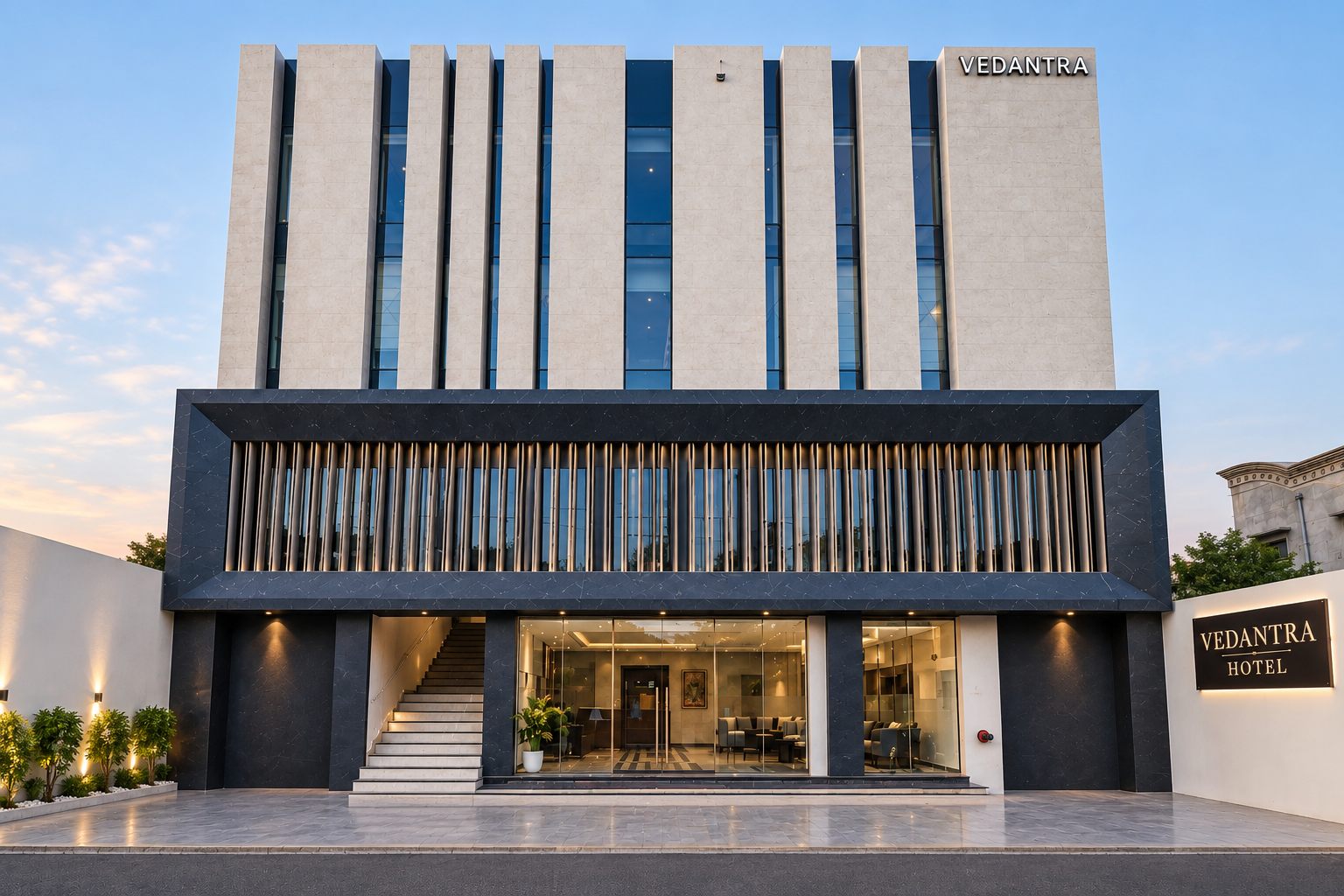 The base for this guide

12 Good to know
A few things that make a difference in Bikaner's temples, markets and streets. None is complicated; all are worth knowing before you arrive.
13 Questions
The questions we hear most often from guests, answered clearly and with local detail.
Ask us something else →Yes. Bikaner has one of Rajasthan's finest forts, a remarkable living old city, a food culture that punches far above its size, and a proper desert evening within 20 km of the centre. It is a working city rather than a resort, which is exactly why it rewards two nights.
Two full days is ideal: one for Junagarh and the old city, one for Karni Mata, Devi Kund and a sunset-and-dinner evening at the Raisar dunes. One night covers the fort and a food walk; four hours is enough for Junagarh and a plate of kachori.
Junagarh Fort, the Karni Mata Temple at Deshnoke, the National Research Centre on Camel, Rampuria Havelis, Bikaneri bhujia, Usta art, hand-knotted carpets and the Thar desert at Raisar.
October to March. December and January are cool and clear, and the Camel Festival falls in early January. April to June is very hot, but early mornings and late evenings are still beautiful; the monsoon is short and unpredictable.
Yes. It is one of India's most extraordinary living temples, and we think everyone should visit once. The sacred rats, or kaba, are cared for by the community and considered auspicious; visitors of every faith are welcome. Go early, wear socks, leave leather behind, walk around the rats and allow 45–60 minutes.
They are private family homes, not a museum. You see the carved façades from the lanes, which is the real experience; ask before stepping into a courtyard. The lanes around Joshiwara are best explored on foot before 10:00.
Jaipur is about 330 km (5.5 hours by road); Jodhpur is about 250 km (4.5 hours). Overnight trains connect both cities, and Bikaner Junction is the main station.
Hotel Vedantra is on Station Road, opposite Platform 6, about 100 metres from Bikaner Junction. Walk with light luggage or take a two-minute auto. Call +91 74130 01102 if you need directions.
Bikaner is generally calm and welcoming. Use the same precautions you would anywhere in India: licensed transport at night, keep valuables close in crowded markets, and dress modestly at temples. Women travelling alone may attract stares in busy areas, but serious harassment is uncommon.
Light, loose cotton for the day, a hat and sunglasses, and a scarf for temples. Cover shoulders and knees at religious sites. For Karni Mata, wear socks and avoid leather shoes, belts and bags.
Not necessarily. Signage is limited in places, so a guide adds context if you want the stories behind the courtyards. Agree the fee before you start, and use an official guide at the gate rather than someone who approaches you outside.
Yes — it is a joyful, easy visit. You will see Bikaneri, Jaisalmeri and Kachchhi camels, calves in the nursery, a small museum and a milk parlour selling camel-milk kulfi and lassi. It is open daily from 11:00 to 18:30; late afternoon is best. Allow 1–1.5 hours.
Start with dal kachori and dal pakodi at Juniya Maharaj, cool down with a jasmine or white-rose sharbat at Chunnilal, and finish with rabdi at Manka Maharaj or kesar kulfi at Sankhla. Chhotu Motu Joshi is the classic stop for rasgulla and poori bhaji, and Bikaner Bhujia Bhandar for namkeen to take home.
Yes. We can arrange a car and a reputable camp at Raisar, about 20 km east, for a camel or jeep ride, sunset on the dunes, Kalbeliya dance, fire and dinner. Tell us your dates and we will confirm what is included and the current price.
Bikaner is overwhelmingly vegetarian, and many kitchens are Jain (no onion, garlic or root vegetables). Most restaurants will explain what is Jain-friendly; ask before ordering if that matters to you.